



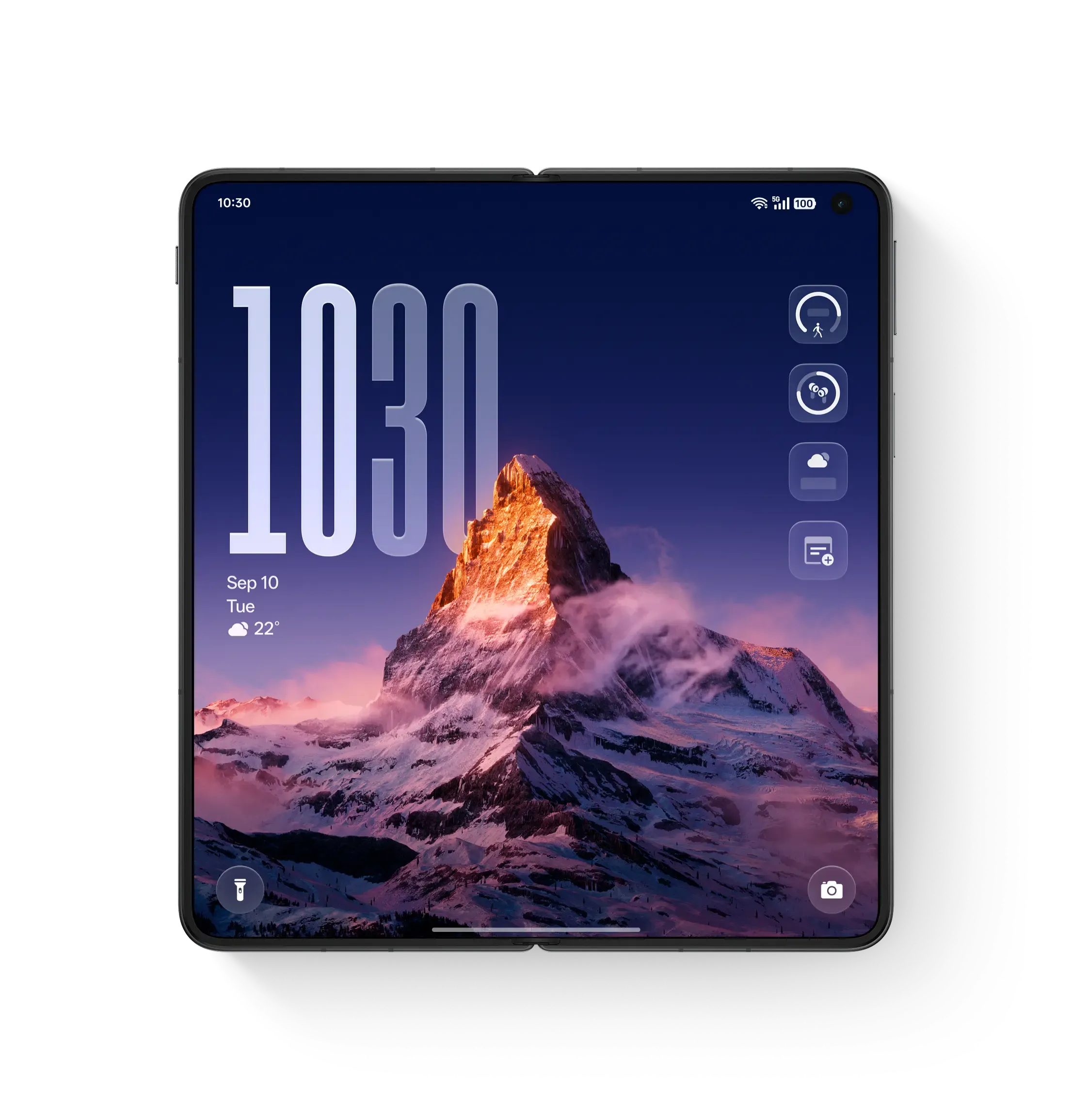
The confirmation is official: eligible existing OnePlus phones will be offered an optional upgrade from OxygenOS to ColorOS 17, with Android Authority reporting that the transition is expected after the official release of ColorOS 17, though OnePlus has not announced a rollout date. Whether that lands as a minor footnote or something more significant depends entirely on why you bought a OnePlus phone in the first place.
This piece is for the users who bought one because of its software. For everyone else, it mostly doesn't matter.
What was confirmed this week, what was already true, and why the branding still matters
Start with what's actually new. OnePlus is offering eligible Western-market devices a voluntary move to ColorOS 17, while users may remain on OxygenOS. OnePlus isn't layering more ColorOS influence on top of it. ColorOS becomes the available upgrade path for eligible devices. That's the freshly confirmed piece.
Everything underneath it was already true. By early 2026, both operating systems had converged on a unified Universal ColorOS codebase. A technical comparison published about two and a half months ago by Adam Lobo found the remaining differences are "primarily aesthetic" — OxygenOS 16 is, in that framing, effectively a skin. The R&D divisions merged in January 2021. A long-term review of the OnePlus 12 from 9to5Google two years ago put it plainly: "OxygenOS isn't OxygenOS anymore."
The erosion started at least three major software versions back. An Android Authority analysis from three and a half years ago noted that OxygenOS 13 was already functionally equivalent to ColorOS 13 with a handful of OnePlus-specific tweaks. That same analysis cited analyst Neil Shah's prediction that OnePlus would become an OPPO sub-brand analogous to how iQOO operates under Vivo, with the enthusiast audience deprioritized in favor of mainstream volume. That prediction has aged well.
So the branding change doesn't cause anything. It confirms it. For users who valued OxygenOS as a distinct platform with a distinct philosophy, this week's announcement matters because it closes the door on any remaining ambiguity about what OnePlus is now. The losses documented below aren't speculative — they're the concrete cost of that closure.
The OxygenOS to ColorOS transition in daily use
Software identity isn't built from spec sheets. It's built from the thirty small interactions that happen before lunch. That's where the transition lands hardest.
Start with visual language. OxygenOS 16 maintains the minimalist Never Settle aesthetic: red accents, a restrained color palette, the classic 1+ clock widget. ColorOS 16 takes a different direction: a light-and-shadow design language, prominent rounded corners, a stacked notification center, and Fluid Cloud, a pill-shaped UI element for real-time alerts that draws obvious inspiration from Apple's Dynamic Island, as the technical comparison showed. You may not hate it. But it is precisely the aesthetic that OnePlus users chose not to have.
The functional regression that will create the most daily friction is Shelf. In OxygenOS, a right swipe from the home screen opened a glanceable panel for widgets, recent contacts, and quick notes. In ColorOS, that gesture belongs to Google Discover. Accessing Shelf now requires swiping down from the top of the screen, which directly conflicts with the gesture for the notification drawer and Control Center, Android Authority confirmed this week. A reliable one-handed shortcut becomes a two-step interruption.
Background app management is a subtler but persistent change. OxygenOS was consistently praised for lighter-touch process handling: apps stayed in memory, multitasking felt fluid. ColorOS takes a more assertive approach to battery efficiency, sometimes terminating background apps mid-task. The OnePlus community's own assessment, published about sixteen months ago, put it this way: OxygenOS remains "slightly smoother" day-to-day, while ColorOS delivers better RAM optimization and battery gains through more aggressive management. That's a tradeoff, not an upgrade.
Smaller identity markers disappear too. The Calculator's "Never Settle" Easter egg triggered by entering "1 + =" won't carry over, Android Authority noted. No individual detail like this is decisive. Collectively, they represent the texture of a brand that pays attention to its users. The alert slider, arguably OnePlus's most beloved physical differentiator, was already removed from multiple flagships as part of the OPPO integration, with the reclaimed space used for faster charging and a larger battery, per Android Authority's earlier analysis.
What ColorOS actually adds, and whether it compensates
A fair argument requires this section. ColorOS does bring real additions.
The Trinity Engine, shared across both platforms, claims 37% overall stability improvements alongside ROM compression that recovers storage space without slowing performance. O+ Connect enables native file sharing between OnePlus and Apple devices via touch, plus wireless screen mirroring to Macs and Windows PCs. The OHealth app now syncs with Apple Watch, including call handling. For users running mixed-device households, these are genuinely useful.
Here's the structural problem with treating these as gains: most of them were already available before the rebrand. Because OxygenOS and ColorOS have shared a backend since early 2026, users running OxygenOS 16 already had access to Trinity Engine, O+ Connect, Zen Space, and the Mind Space AI screenshot analysis tools, as both Android Authority and Adam Lobo's comparison confirm. The ColorOS rebrand doesn't unlock a new platform. It removes the last visible layer of distinction while the underlying capability stays largely the same.
That reframing is the core of the argument. The net change for an OxygenOS user is: lose the visual identity, lose the Shelf gesture behavior, keep everything you already had, and potentially inherit OPPO's app store, although OnePlus has not confirmed the bundled apps in its ColorOS build. Open Canvas multitasking across up to five simultaneous apps on larger screens — a genuine capability OxygenOS users valued — will carry through to the ColorOS build, just under different branding. That continuity is real. It doesn't compensate for what changes.
On update speed, Pete Lau's 2021 merger rationale was faster, with more stable updates. The OnePlus community noted about sixteen months ago that updates may now take longer because OnePlus builds require testing across the broader ColorOS pipeline before release. Software distinctiveness has visibly narrowed. Those are the measurable outcomes against a five-year-old promise.
The bloatware problem, and what it means for ownership
Beyond visual and gestural changes, the ColorOS transition carries a practical consequence that users who chose OnePlus to escape bloatware will feel immediately.
OPPO's current lineup, including the premium Find X9 series, ships with pre-installed third-party apps including Amazon, Booking.com, Facebook, Instagram, LinkedIn, and Netflix, alongside OPPO's own "App Market" and "Game Center," Android Authority reported this week. OnePlus flagships have been spared this so far. Android Authority expects that to change with the transition. More consequentially, OPPO's proprietary app store cannot be fully uninstalled, regardless of effort.
For context on why this stings specifically: a significant portion of OnePlus's Western user base came to the brand as a deliberate escape from exactly this model. Choosing OnePlus over Samsung or Xiaomi was, for many buyers, a choice to avoid persistent proprietary app stores and carrier-style pre-installs. The ColorOS rebrand imports the infrastructure that made those alternatives unappealing.
For US and European owners, the software change intersects with a separate ownership risk that deserves its own attention. In Europe, Android Authority reports that OnePlus is offloading much of its business to OPPO and directing users to buy OPPO instead, with repairs expected to slowly transition to OPPO as well.
There are already reports of OnePlus struggling to handle repair requests and issuing warranty vouchers rather than processing hardware claims. In the US, since OPPO has no American market presence, Android Authority notes the long-term logistics of that repair pathway remain unclear, although OnePlus says eligible devices will retain repair and after-sales service.
OnePlus already has limited US inventory, suggesting it had been preparing for this move rather than managing a supply issue. These are warning signs, not a confirmed collapse, but they warrant treating as an active ownership risk, not background noise.
The Android Authority analysis from three and a half years ago warned that losing the enthusiast crowd without gaining mainstream adoption in return would leave OnePlus as "a dead brand walking." The ColorOS rebrand doesn't resolve that tension. It deepens it.
What OnePlus owners should do now
The transition isn't here yet. OnePlus has not confirmed which models are affected first, whether all global variants convert simultaneously, or whether the update can be deferred on existing devices, Android Authority confirmed this week. That window is worth using deliberately.
For enthusiast users who bought OnePlus specifically for clean software: the losses are real and largely uncompensated by gains that were already on your device. Check whether OTA updates can be delayed on your specific model. If custom ROM support matters to you, verify whether your device's bootloader remains unlockable under the ColorOS transition. And watch for model-specific rollout notices. OnePlus hasn't confirmed which devices convert first.
For mainstream users who wanted capable hardware with solid software support: the transition is unlikely to affect your daily experience significantly. Update commitments for support periods vary by model; the OnePlus 12R is promised at least three Android-version upgrades and four years of security updates, per the OnePlus community, and the AI features and ecosystem integrations are genuine additions. Whether those commitments carry through the ColorOS transition without delay is not yet confirmed.
For US and European owners specifically, the software change is the most visible issue, but the repair and support transition is the more urgent one. Confirm your device's current repair pathway in your region, verify whether your warranty terms carry through if service migrates to OPPO, and don't wait until you have a hardware problem to discover the answer.
The broader picture is this: the ColorOS rebrand isn't the end of OnePlus as a hardware brand. It's the end of OnePlus as a distinct enthusiast software brand in Western markets, the formal close of a project that began in 2021 and has been completing itself ever since. For the users who chose OxygenOS because it was different, that's not a footnote. It's the whole story.



Comments
Be the first, drop a comment!