





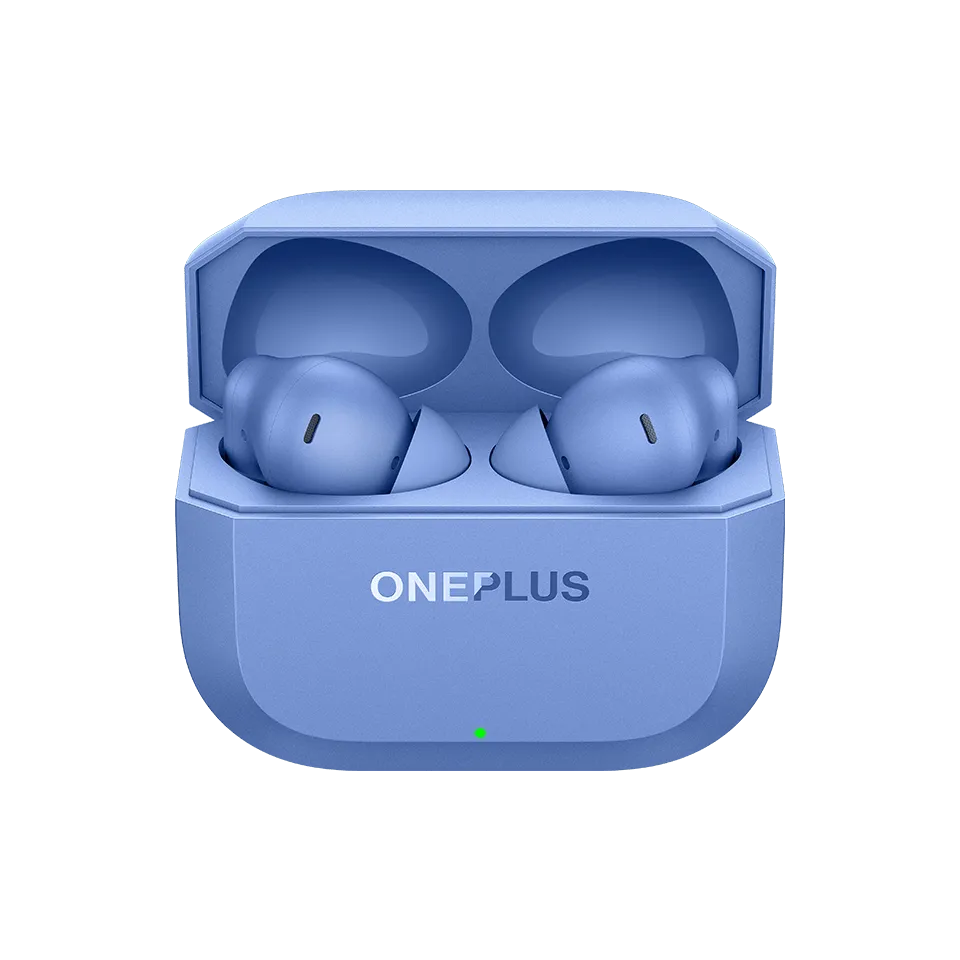
We've all been there—frantically searching through couch cushions, checking jacket pockets, or retracing our steps through the house looking for those tiny earbuds that seem to vanish into thin air. OnePlus has been making significant strides in the wireless earbuds market, with their latest offerings showcasing impressive technical capabilities and thoughtful design features.
The OnePlus Nord Buds 3r recently launched in India as the successor to the Nord Buds 2r, while the premium OnePlus Buds 4 arrived with enhanced noise cancellation and extended battery life capabilities. Meanwhile, OnePlus has been implementing advanced device tracking features in its flagship smartphones, with the OnePlus 13 supporting Google's Find My Device network even when powered off, per Gadgets360. This convergence of advanced audio technology and sophisticated tracking capabilities positions OnePlus uniquely to solve one of wireless earbuds' most persistent problems.
Why losing earbuds has become such a universal problem
The miniaturization of wireless earbuds has created an inevitable side effect—they're incredibly easy to misplace. It's almost comical how something we rely on daily can disappear so completely. Modern earbuds like the OnePlus Nord Buds 3r feature compact charging cases designed to slip easily into pockets and bags, reports Mobigyaan, making portability a key selling point. This convenience factor is exactly what we want—until it isn't.
The design philosophy behind today's earbuds prioritizes discreteness and comfort, but this creates unexpected consequences. However, this same portability becomes a liability when the earbuds inevitably fall out during daily activities. The OnePlus Buds Pro 3 maintain a stem-style design with a two-tone glossy finish, but their shape doesn't always guarantee a perfect fit. Testing has shown that these earbuds can dislodge during heavier movements like running, despite including four sets of various-sized eartips to help achieve better in-ear stability, the same review notes.
What makes this problem particularly frustrating is how today's smart features highlight the tracking gap. The OnePlus Buds 4 support tap controls and wear detection features that automatically pause music when removed, which means they're intelligent enough to recognize when they've left your ears—yet this awareness doesn't extend to helping you locate them afterward. This represents a critical missing link: earbuds that understand their usage context but can't communicate their physical location when needed most.
Current solutions and their limitations
OnePlus has implemented some basic tracking features for its existing earbuds, but these solutions reveal significant gaps in real-world effectiveness. The OnePlus Buds Pro 2, considered one of the best truly wireless earbuds available, still faces the fundamental challenge of being tiny devices that become nightmarish to locate when misplaced.
Here's where current tracking methods fall short: they're essentially limited to "last known location" scenarios. Most existing solutions rely on Bluetooth connectivity, which means the earbuds must be powered on and within range to be located effectively. If your earbuds are sitting in their case with the lid closed, or if the battery has died, traditional tracking becomes useless.
The OnePlus Buds 4 feature advanced connectivity through Bluetooth 5.4, SoundGuys confirms, which provides more stable connections and better range than earlier versions. But this improvement only extends the reliable tracking distance—it doesn't solve the fundamental power dependency issue. When earbuds are genuinely lost, they're often disconnected, powered down, or separated from their case.
This creates a tracking dead zone exactly when you need location services most. Current solutions can make your earbuds emit a sound if they're connected and responsive, but offer no persistent location history, offline functionality, or individual earbud tracking if they've separated. The gap becomes obvious: we need tracking that works independently of the primary device connection and doesn't drain the battery dedicated to audio performance.
What OnePlus could learn from its smartphone innovations
OnePlus has already demonstrated advanced tracking capabilities in its smartphone lineup that could potentially revolutionize earbud location services. The OnePlus 13 supports Google's Find My Device network with anti-theft features that were previously exclusive to select Pixel devices, Gadgets360 reports. But here's what makes this particularly relevant for earbuds: the technology works even when devices are completely powered off.
The OnePlus 13 can be located even when stolen, powered off, or when the battery runs out, using a feature called Powered Off Finding, the same article explains. Imagine applying this principle to earbuds—suddenly, a dead battery wouldn't mean your expensive earbuds disappear forever. This functionality uses encrypted location information sent through the Find My Device network, allowing other connected devices in the vicinity to securely relay location data, according to the report.
The technical foundation already exists within OnePlus's ecosystem. The technology leverages specialized hardware in the Snapdragon 8 Elite chipset, specifically the FastConnect 7900 connectivity subsystem, Android Authority confirms. What's particularly promising is the collaborative network approach: when a device is connected to the network, it "securely" sends the location information of devices it detects in the vicinity to help owners locate them, as Gadgets360 notes.
This network-based tracking model could transform earbud location services by creating persistent tracking that doesn't depend on direct device connections. Instead of relying solely on your phone's Bluetooth range, lost earbuds could broadcast location data to any nearby Find My Device network participant, creating a crowdsourced tracking solution that works across device ecosystems.
The technical challenges of earbud tracking
Implementing advanced tracking features in earbuds presents unique technical hurdles that go well beyond smartphone applications. Let's break down the key engineering challenges and potential solutions.
Power consumption represents the most critical constraint. Current OnePlus earbuds like the Nord Buds 3r offer impressive battery life with up to 54 hours of total playback time, Mobigyaan notes, but dedicating battery resources to continuous tracking could compromise this advantage. The OnePlus Buds 4 achieve around 6 hours of playback with ANC enabled, extending to 24 hours total with the charging case, USwitch reports. The solution lies in ultra-low-power tracking modes that activate only when earbuds become disconnected, similar to how the OnePlus 13's Powered Off Finding preserves essential connectivity without draining the main battery.
Physical space constraints create another engineering challenge that demands innovative component miniaturization. Earbuds like the Nord Buds 3r already incorporate 12.4mm dynamic drivers with titanized vibrating diaphragms, dual microphones, and Bluetooth 5.4 connectivity, according to Mobigyaan. Adding dedicated tracking hardware requires integrating additional components while maintaining the IP55 dust and water resistance ratings that users expect, the same source confirms. However, advances in system-on-chip integration suggest that tracking functionality could be incorporated into existing Bluetooth controllers rather than requiring separate hardware.
The most complex challenge involves implementing individual earbud tracking rather than just case-based location services. Each earbud needs an independent tracking capability since they can be lost separately or scattered to different locations. This multiplies the technical complexity but also creates opportunities for precise location triangulation using multiple tracking points.
Durability requirements add another layer of complexity, as any tracking hardware must withstand the physical stresses that earbuds routinely endure – drops, moisture from sweat, and temperature variations. Yet these same constraints drive innovation toward more robust, integrated solutions that could actually enhance overall device reliability.
Where the future of earbud tracking is headed
The convergence of several technological trends suggests that comprehensive earbud tracking solutions are not just feasible but inevitable. OnePlus has demonstrated its commitment to pushing technical boundaries with features like LHDC 5.0 support for high-resolution audio up to 24-bit/192kHz in its latest earbuds, SoundGuys reports. This willingness to implement cutting-edge connectivity features within strict size and power constraints shows they have the engineering expertise to tackle tracking challenges.
The success of Find My Device's Powered Off Finding on the OnePlus 13, which was discovered during testing by Android Authority, demonstrates OnePlus's active implementation of Google's most advanced tracking technologies. This isn't just feature adoption – it represents a strategic commitment to solving real-world device location problems that users face daily.
The technological foundation is expanding rapidly. Industry-wide adoption of ultra-wideband (UWB) technology and improvements in low-power Bluetooth beacons could enable earbuds to participate in mesh tracking networks similar to Apple's AirTag ecosystem. The key advantage for OnePlus lies in leveraging Google's existing Find My Device network rather than building a proprietary solution, providing immediate access to millions of potential tracking nodes.
What makes the future particularly promising is OnePlus's ecosystem integration approach. As evidenced by features like Google Fast Pair support and multipoint connectivity in the Buds Pro 3, OnePlus is building earbuds that work seamlessly across device ecosystems. A comprehensive tracking solution that integrates with OnePlus smartphones, leverages Google's network infrastructure, and provides persistent location services regardless of power status would address every major limitation of current tracking methods.
The implementation timeline likely depends on balancing tracking functionality with audio performance priorities. However, given OnePlus's track record of incorporating advanced connectivity features and their proven success with smartphone tracking technology, comprehensive earbud tracking represents a logical next step rather than a distant possibility. The question isn't whether this technology will arrive, but how quickly OnePlus can integrate it without compromising the audio experience that makes their earbuds compelling in the first place.





Comments
Be the first, drop a comment!