



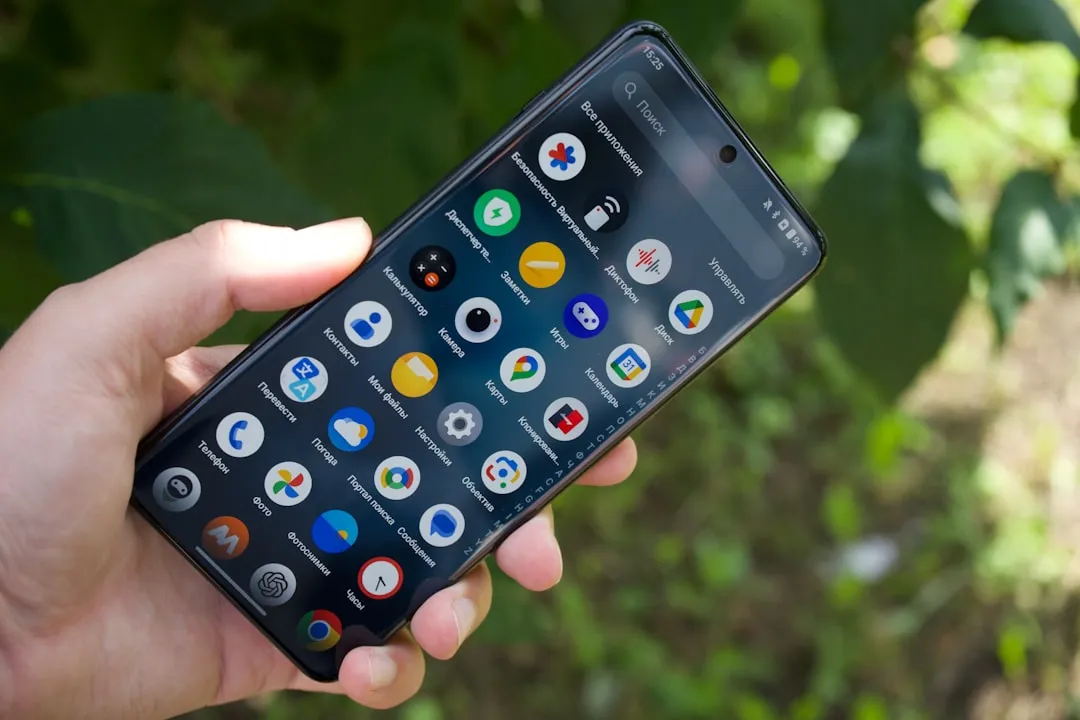
You've probably heard by now that OnePlus might be shutting down. The company was quick to push back against these reports, with Robin Liu, CEO of OnePlus India, reassuring users that the company would continue operating normally and OnePlus North America stating they "continue to operate, with full guarantee of users' after-sales support, software updates, and rights commitments".
But here's the thing: even if the denials are true, the broader Android ecosystem should still be paying attention. What we're witnessing isn't just one company's potential downfall—it's a warning sign about market forces that are making it nearly impossible for mid-tier smartphone brands to survive in 2026.
The rumors started swirling when reports suggested that OPPO was dismantling OnePlus, prompting the company's swift response. Yet beneath these official statements lies a complex reality that reveals the harsh economics now strangling innovative brands that once thrived in the middle ground between budget and flagship territory.
The numbers paint a sobering picture of decline. OnePlus shipments dropped more than 20% in 2024, falling from roughly 17 million units to somewhere between 13 and 14 million. This wasn't just market softness—while OnePlus contracted, the parent company OPPO grew 2.8 percent over the same period. Meanwhile, the company faced increased scrutiny, including legal troubles when the CEO faced an arrest warrant in Taiwan.
The signs were already there
Let's break down what's been happening behind the scenes. The warning signs have been accumulating for months, revealing a brand struggling against market dynamics that make scale everything and innovation secondary.
India and China account for 74% of OnePlus' shipments, making these markets absolutely critical for survival. But here's where the economics get brutal: 4,500 retail stores across six states in India stopped selling OnePlus devices because razor-thin margins meant they couldn't make money. When your retail partners can't profit from selling your products, you're facing a fundamental business model crisis, not just competitive pressure.
The collapse in India was particularly devastating. OnePlus' market share in India plummeted by around 70% in the past 12 months, with premium segment share crashing from 21% to 6%. This wasn't gradual decline—it was a free fall that eliminated the market buffer OnePlus needed to weather downturns elsewhere.
China's performance told the same story of retreat under competitive fire. OnePlus' share dropped from 2% to 1.6% in 2024, despite the company setting ambitious goals to surpass 3% market share. When you're losing ground in your home market while domestic competitors strengthen their positions, that signals a strategic failure that goes beyond product quality or pricing.
The operational changes revealed the depth of the problem. The US headquarters in Dallas closed in March 2024 with no announcement, and North American operations now run out of Palo Alto with fewer than 15 staff. This pattern of silent downsizing extends globally—by 2020, OnePlus teams in France, Germany, and the United Kingdom had been reduced from about 60 employees to fewer than 10 with no formal communication about the changes.
These aren't strategic pivots or temporary adjustments. They're the moves of an organization systematically dismantling its infrastructure because it can no longer justify the costs of independent operation.
What this means for Android's future
Here's why the Android world should be worried, regardless of whether OnePlus survives in name: we're watching the elimination of the innovative middle ground that has historically driven the entire ecosystem forward.
OnePlus built its reputation as the scrappy challenger that could deliver flagship performance at accessible prices while pushing boundaries others wouldn't touch. The brand may not have a sizable market share, but when it comes to mind share, there isn't another Android phone manufacturer that gets quite as much attention. That attention translated into industry influence—when OnePlus introduced features like ultra-fast charging or clean software experiences, it forced Samsung, Google, and others to respond with their own innovations.
But the structural changes reveal how that influence has been systematically eliminated. OPPO doesn't want OnePlus to draw too much attention to itself, likely to avoid scrutiny into the broader business. The result is that the company doesn't have distinct design, camera, or software teams, and OxygenOS 16 software is identical to ColorOS 16—the only difference is the name.
What we're seeing is a managed reduction, executed without ceremony and designed to avoid disruption while the underlying innovation capacity is stripped away. Instead of launching several products across tiers, the manufacturer will now focus its attention on a few crucial devices—devices that will be derivatives of shared platforms rather than independent innovations.
The precedent this sets should alarm anyone who values choice and competition. If a brand with OnePlus's recognition, loyal following, and proven track record can't maintain independence in today's market, what does that say about the viability of other challenger brands? We're moving toward a future where only massive players with enormous marketing budgets and carrier relationships can survive the brutal economics of smartphone competition.
The broader implications we can't ignore
Bottom line: OnePlus's struggles expose market realities that are reshaping the entire Android landscape in ways that reduce innovation and limit consumer choice.
The economics have become unforgiving for any brand operating at mid-scale. At roughly 1.1 percent of global smartphone shipments, OnePlus could not justify the cost of standing alone. Separate marketing operations, regional headquarters, dedicated product planning, and localized partnerships only work at scale. Once volume eroded, those structures became liabilities that drained resources faster than they generated value.
Even massive financial support couldn't overcome these structural challenges. In December 2022, OPPO committed roughly $14 billion to support OnePlus, opening retail stores and service centers while allowing phones to sell at minimal margins. Yet by 2024, OPPO posted modest growth while OnePlus continued to contract at double digit rates, proving that the problem wasn't just financial—it was fundamental market structure.
Political headwinds compound these economic pressures. The change in strategy is likely motivated by political headwinds between the U.S. and China, making it increasingly difficult for Chinese brands to maintain strong presences in Western markets where margins are higher and competition is theoretically more manageable.
The competitive landscape has also shifted decisively against mid-tier challengers. Other established brands have successfully fended off OnePlus across all channels and markets, not through superior products necessarily, but through scale advantages that OnePlus couldn't match—carrier relationships, marketing budgets, and supply chain efficiencies that come only with massive volume.
Even if OnePlus continues to exist in name, what has stopped is investment in a future where OnePlus operates as a fully realized brand. This represents a fundamental shift from a company that once promised to "Never Settle" to one that's settling for managed decline while maintaining the appearance of business as usual.
Where do we go from here?
The OnePlus situation serves as a crucial warning about the smartphone industry's trajectory toward consolidation and the elimination of innovative middle players.
The most likely scenario isn't a dramatic shutdown announcement—that would be disruptive and expensive. Instead, we're probably looking at continued gradual reduction until future OnePlus phones become derivatives of shared internal platforms rather than statements of direction. The name survives for brand value and existing customer loyalty, but the spirit that made OnePlus matter slowly disappears under operational integration.
While signs of internal change are visible, they point more towards strategic consolidation than the end of the brand. But this type of consolidation typically means fewer genuine choices for consumers and less competitive pressure on established players to innovate aggressively.
What's particularly concerning is how this pattern reveals the collapse of the innovative middle ground. OnePlus once occupied a rare position, small enough to move fast and visible enough to matter, but that space has collapsed under the economics of a market that rewards scale and punishes anything in between.
Until OnePlus or its parent company makes an official announcement, the future of the brand remains uncertain, but far from sealed. However, the trajectory is clear: the industry is losing the type of nimble, risk-taking brands that have historically pushed innovation forward and kept larger players honest.
The Android world needs companies willing to challenge established norms and push boundaries that the giants are too risk-averse to explore. Whether this particular brand survives or not, the industry must find ways to preserve space for innovative thinking and genuine competition. Because when challenger brands disappear—gradually, quietly, with managed precision—we all lose access to the kind of bold moves and fresh perspectives that have made Android great.
PRO TIP: If you're currently using a OnePlus device, don't panic. Existing commitments will be honored, and devices already sold will receive the promised 3 to 4 years of Android updates and 4 to 5 years of security patches. Your phone will continue working and receiving support, but the company that made it may never be quite the same innovative force it once was.







Comments
Be the first, drop a comment!