



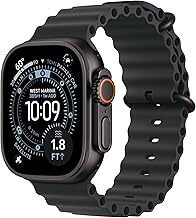


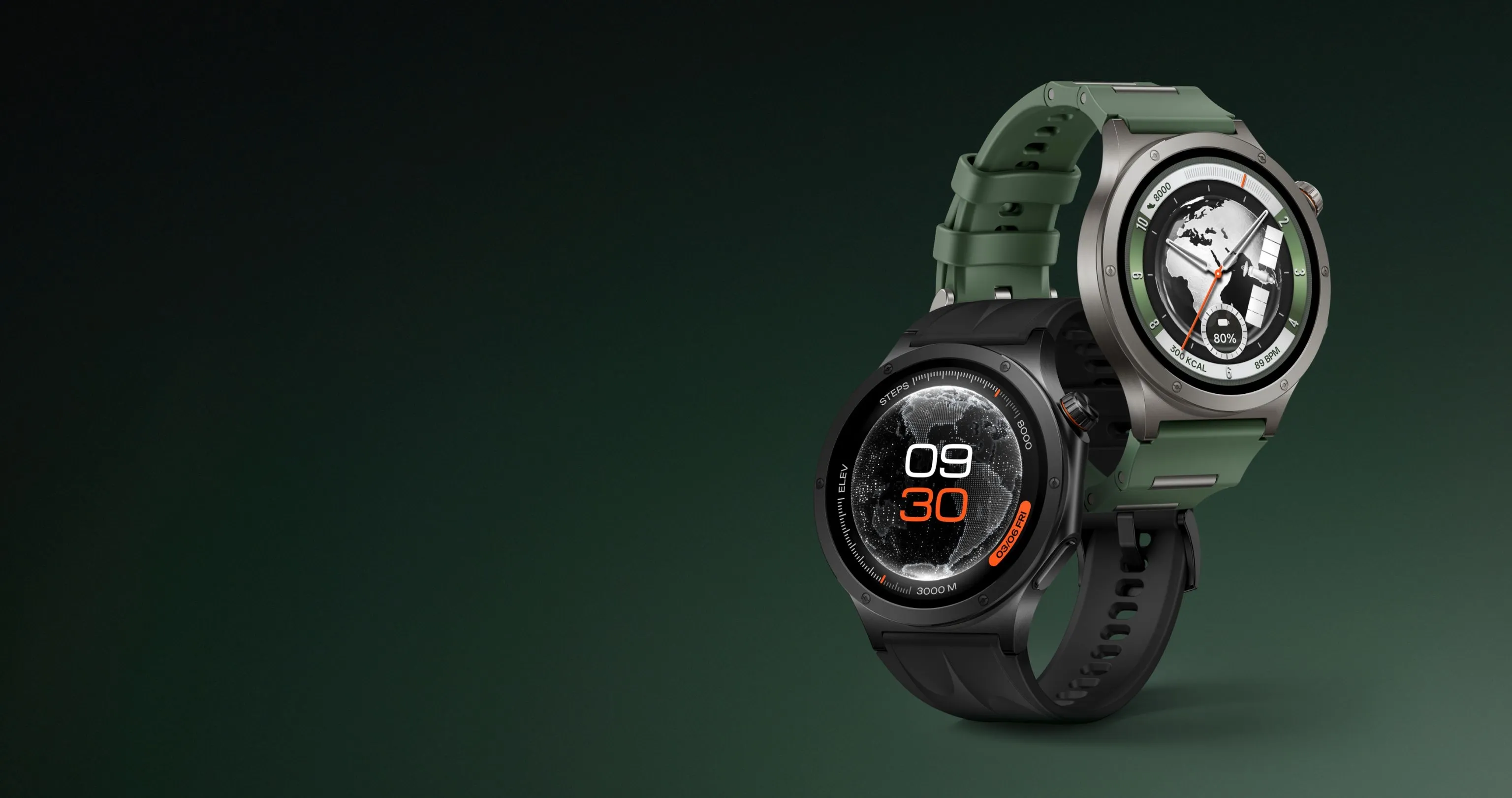
OnePlus smartwatches deliver strong battery life for the price, but they trail rivals on a specific set of features, according to Engadget's pros-and-cons rundown published Nov. 9. That's basically the whole debate in one sentence.
Weighing the OnePlus smartwatch pros and cons for yourself comes down to figuring out which of those missing features you'd actually notice day to day.
The lineup worth comparing includes the Watch 2, Watch 3, Watch 3 43mm, and Watch 4. The Watch 4 is already a released product, but availability is a significant complication.
OnePlus announced in July 2026 that it would stop launching new products in North America and Europe. Its official U.S. store no longer sells new smartwatches, although remaining stock may still be available through third-party retailers.
This piece sorts out what's a company marketing claim, what the available testing actually shows, and where individual models differ. That way you can see where the evidence holds up before deciding whether to buy, wait, or shop elsewhere.
OnePlus smartwatch battery life: the biggest advantage
Battery life rests on several layers of evidence: company specifications, comparative charging results, and real-world use.
Start with OnePlus's own numbers for the Watch 3: up to five days in Smart Mode, three days under heavy use, and 16 days in Power Saver Mode, with 10 minutes on the charger said to cover a full day.
Those figures appear in OnePlus's official Watch 3 announcement.
OnePlus attaches a disclaimer to its battery figures: actual results depend on which features stay active, how often calls and messages come through, and other usage conditions.
Treat the headline numbers as laboratory estimates, not promises.
The charging comparison cited by Engadget is also favorable to OnePlus. The Watch 3 reached 80% charge in 30 minutes, compared with 50% for the Apple Watch Series 10 and 36% for the Samsung Galaxy Watch Ultra over the same period.
Engadget cites those results in its roundup, but doesn't present them as a new charging experiment conducted for that article. They are useful comparative figures, not proof that every OnePlus model charges at the same speed.
The smaller Watch 3 43mm complicates the battery comparison.
According to OnePlus's official specifications, the 43mm model is rated for up to 60 hours in Smart Mode, 36 hours under heavy use, and seven days in Power Saver Mode.
That's substantially less endurance than the larger Watch 3, which uses a bigger battery.
The 43mm model still supports fast charging, with OnePlus claiming a 10-minute charge can provide up to 24 hours of normal use.
Real-world battery life depends heavily on configuration. Continuous health monitoring, GPS workouts, Always-On Display, and more demanding sleep features can reduce endurance, while lighter use may extend it.
That variation is why the headline figure doesn't hold up the same way for every setup.
The newer OnePlus Watch 4 carries official claims of five days in Smart Mode and up to 16 days in Power Saver Mode.
Those specifications are published by OnePlus, but comparable independent endurance testing remains important before assuming the newer model consistently outlasts its predecessors.
Build quality and comfort: rugged, but chunky
The Watch 3's hardware holds up on paper.
It's built from a stainless-steel body, a titanium PVD bezel, and a sapphire crystal display, with MIL-STD-810H testing alongside IP68 dust and water resistance and a 5ATM water-resistance rating.
OnePlus's fine print adds a caveat worth knowing before wearing it in a hot shower: the water-resistance rating doesn't cover hot showers, saunas, hot springs, or diving.
The company also recommends cleaning and drying the watch after exposure to seawater.
Engadget's assessment supports the broader impression of solid build quality while flagging what it costs in comfort.
The watches have large, bright AMOLED screens and a traditional-watch appearance that Engadget considers more attractive than many rivals, although that's partly a matter of taste.
The downside is size.
Engadget describes OnePlus watches as chunky and relatively heavy, making them less comfortable for slimmer wrists or extended wear.
The older Watch 2 shares a similar stainless-steel design and carries MIL-STD-810H, IP68, and 5ATM ratings, according to OnePlus's original announcement.
So the bulk Engadget describes isn't a Watch 3-only problem. It's been part of the design language across generations.
The Watch 3 43mm offers a more compact alternative. It weighs approximately 37.8 grams without its strap, compared with 49.7 grams for the full-size Watch 3.
The Watch 4 changes the design again, using a titanium body that OnePlus says weighs approximately 43 grams without its strap.
That makes it lighter than the standard Watch 3, although not as light as the 43mm version.
Buyers hoping another model fixes the comfort complaint should compare case size, weight, and strap fit rather than generation alone.
OnePlus Watch features and limitations: fitness tracking vs. medical-grade monitoring
OnePlus draws a clear line between everyday fitness tracking and medical-grade monitoring, and it's worth understanding before buying.
The company's disclaimer states that its vascular-health metric is intended for general wellness and fitness purposes only and isn't meant for diagnosing, treating, or managing a medical condition.
OnePlus also says the Watch 3 isn't a medical device for diagnosis, treatment, or disease prevention.
That's OnePlus's own language, not an outside inference, and it should set expectations for anyone buying the watch primarily for health monitoring.
Inside that general-wellness category, the feature set is broad.
The full-size Watch 3's 60-second Health Check-In covers measurements and indicators including heart rate, SpO2, vascular health, wrist temperature, sleep, and mental well-being.
Add dual-frequency GPS, which OnePlus says improves outdoor location accuracy, plus more than 100 sport modes covering activities from running to badminton, and there's plenty here for tracking workouts and daily habits.
The Watch 3 43mm has a different feature mix.
It supports continuous heart-rate and blood oxygen tracking, sleep monitoring, respiratory assessments, and more than 100 sports modes.
However, its published specifications don't list the same vascular-health feature or dual-frequency GPS system found on the full-size Watch 3.
Buyers shouldn't assume the smaller version delivers identical health and positioning capabilities simply because it shares the Watch 3 name.
Where OnePlus falls short in the U.S. is medical certification.
Engadget reports that U.S. OnePlus watches lack ECG functionality because the company hasn't obtained the required FDA authorization.
Fall detection requires a more model-specific answer.
Engadget notes that older Watch 2 models lack fall detection. However, OnePlus explicitly lists Fall Detection and Emergency SOS in the Watch 3 43mm specifications.
That means fall detection shouldn't be described as missing across the entire lineup.
Its operation, regional availability, and emergency-contact requirements still deserve checking before anyone relies on it as a safety feature.
The app presenting much of this data gets a mixed review.
Engadget describes the OHealth companion app as serviceable but not particularly impressive, which matters because it's the main way users review their health information.
OnePlus watches also support Google apps through Wear OS, giving owners access to tools such as Google Maps, Google Wallet, and Google Calendar without relying exclusively on OHealth.
Which OnePlus Watch to buy, and where it trails Apple Watch and Samsung Galaxy Watch
Two limits apply across the models in this comparison.
None offers cellular or eSIM connectivity, so LTE independence from a paired phone isn't available.
And because the watches use Wear OS, they're compatible with Android phones rather than iPhones.
There are also important differences between generations:
OnePlus Watch 4: The newest model, with a titanium body, Google Gemini support, more than 100 sports modes, and a 60-second Wellness Overview. OnePlus claims up to five days in Smart Mode and 16 days in Power Saver Mode. It's an actual released product, but buyers need to verify local stock and warranty support before purchasing.
OnePlus Watch 3: The strongest documented choice for buyers prioritizing battery life and comprehensive health tracking. It offers the 60-second Health Check-In, vascular-health insights, dual-frequency GPS, and up to five days of Smart Mode battery life. Its main compromise is its relatively large and heavy case.
OnePlus Watch 3 43mm: The better starting point for smaller wrists, weighing approximately 37.8 grams without its strap. It supports fall detection and Emergency SOS, but its battery rating drops to 60 hours in Smart Mode and it doesn't match every health or GPS feature of the larger Watch 3.
OnePlus Watch 2: The oldest model here, built around a 500mAh battery rated for up to 100 hours in Smart Mode or 48 hours under heavy use, with 2GB of RAM and 32GB of storage. It's also confirmed to lack fall detection on older units. A discounted Watch 2 may still make sense, but software support and remaining warranty coverage deserve close attention.
The big gap, according to Engadget, is cellular support.
OnePlus watches don't offer an LTE model, so phone-free calling and mobile data aren't available in the same way they are on supported Apple Watch and Samsung Galaxy Watch cellular versions.
A OnePlus watch can still perform certain tasks without an active phone connection, including local health tracking and some offline functions.
But buyers seeking a fully independent cellular smartwatch should look elsewhere.
Combine that with Wear OS's Android-only compatibility and the FDA-authorization gap for ECG, and it's clear why buyers who need those particular features may prefer Apple or Samsung.
There's also a new concern that has less to do with specifications.
In its July 16 announcement, OnePlus confirmed that it would stop launching products in North America and Europe.
The company says existing devices will continue receiving software updates, security patches, warranty coverage, and after-sales support.
However, that doesn't guarantee that replacement hardware, accessories, or particular smartwatch models will remain easy to obtain.
For U.S. and European buyers, retailer availability and support may matter as much as the hardware itself.
What to do before you buy
Start with your phone.
If you carry an iPhone, skip this lineup altogether, since OnePlus's Wear OS watches require Android.
If you're using Android, decide which features matter most.
Buy the full-size Watch 3 if multi-day battery life, fast charging, and comprehensive health tracking are your priorities. It has the strongest documented combination of endurance, GPS, and health features in the available comparisons.
Choose the Watch 3 43mm if the standard model feels too bulky.
It's the clearest option for smaller wrists, but the lighter design comes with shorter battery life and a different health-feature set.
Consider the Watch 4 if you want the newer titanium construction, Google Gemini integration, and updated wellness features.
Unlike earlier speculation, the Watch 4 has been released. The question is whether you can find it through a reputable seller with valid local warranty support.
Avoid the lineup if cellular independence, iPhone compatibility, or FDA-authorized ECG monitoring is non-negotiable.
For fall detection, check the exact model rather than assuming every OnePlus watch lacks the feature. The Watch 3 43mm explicitly lists it, although availability and setup requirements may vary.
For buyers in North America or Europe, availability adds another layer to the decision.
OnePlus has stopped launching new products in those regions and has shifted its website toward supporting existing customers.
That makes a discounted Watch 2 or Watch 3 potentially attractive, but it also makes warranty terms, return policies, and remaining software support more important.
If you already own a Watch 2 or Watch 3, there's no automatic reason to replace it.
OnePlus has promised continued updates for existing devices, and the battery and fitness benefits of upgrading will depend on which features you actually use.
The buying decision comes down to familiar trade-offs: OnePlus offers strong endurance and capable fitness tracking, but its large designs, missing LTE options, uneven health features, and reduced regional availability make choosing the right model more complicated in 2026.



Comments
Be the first, drop a comment!